
Data migration is a key step in successful implementation. Data migration workshops help define this strategy which includes general strategic considerations and specific topics such as volumes, tools, performance and validations.
These workshops help ensure a successful migration to Dynamics 365.
Strategy
Data migration strategy
The objective is to define a data migration strategy through workshops and several important discussion topics. The following points list the important areas, but this is not an exhaustive list. Each project has slightly different considerations.

Data Management Strategy
The objective here will be to review the data management strategy and identify roles and responsibilities. Then you will define how the data will be prepared and validated later, and which tools to use. Basically, this subject is there to understand the whole data migration strategy.
Planning and strategy
Planning and Strategy covers project timelines, who is responsible for the data and will be responsible for all associated tasks (extraction, cleaning and import). It is important to consider what type of data should be integrated into the solution and whether all this data is required. Environments and tools are needed as part of this conversation. Make sure you understand the number and nature of environments included in the strategy, as well as the tools used.
This section focuses on the following questions:
- Will user acceptance tests (UAT) be performed on the migrated data?
- How many data migration or dry runs will be conducted?
- Have the data structures and relationships of your destination solution been defined?
- What types of environments will the data migration activities take place in?
Volume of data
Here you need to verify that the volume of migrated data has been evaluated. For successful data migration, it is crucial to have a clear idea of the number of records migrated from legacy systems to the new environment. In scenarios where you are migrating large volumes of data, knowing the number of records involved and understanding how the tool works will save you time.
This section focuses on the following questions:
- Which tables contain the most records?
- How will the large volumes of data be initially synchronized for dual write integration?
Tools
What tools are used and describes the plan to use them. There are different approaches and different phases such as data copying/synchronization between legal entities and data copying between environments. Be sure to discuss how the data will be extracted, transformed and reloaded into the system.
This section focuses on the following questions:
- What tools will allow moving/copying/synchronizing data between legal entities?
- Is there a good general understanding of the tools to use when migrating data?
- What tool will be used to perform data migration?
Performance
The performance part of the data migration process is related to better data quality, faster cycles and ultimately a feasible cutover timing. It is therefore important to determine the best configuration, technical and functional, for performance improvement, and to perform several series of tests to validate this configuration.
This section focuses on the following questions:
- What are the characteristics of the environment intended for data migration?
- Does the data migration plan include non-functional requirements?
- Has the performance configuration been considered and planned?
Validation of data
Data validation is a mandatory step to ensure that the migrated data is complete and aligned with business needs. Data validation should be well documented with all necessary criteria defined.
This section focuses on questions such as: What is the post-migration data validation plan (data quality, data formatting, etc.)?
Tests
Testing the migrated data is crucial for the entire data migration process. The objective is to ensure that tests are thoroughly documented, unit tests exist and results are accounted for and transferred to future data migration cycles.
This section focuses on the following questions:
- Have unit tests been defined to test the migrated data?
- How will test results be documented?
- Is error management planned and taken into account?
Workshop
Preparation of the Data Migration Strategy workshop
The time may vary depending on the complexity of the project, the scope of the migration and the challenges encountered throughout the implementation.
Prior to the Data Migration Strategy workshop, participants should be as familiar as possible with its structure, prerequisites and types of topics that will be covered.
The main prerequisite for preparation is the Data Migration Strategy workshop template capturing information on previously presented sections (such as data management strategy, data volume, tools, etc.). The implementation team will need to fill in the template before the workshop.
The following project artifacts are prepared to enrich the discussions during the workshop:
- Project charter: document providing the context of the project, including key objectives and expected results.
- Roll-out plan/schedule with current and next phases: Gantt document or chart illustrating the current and next phases of the digital transformation journey.
- Environmental plan: document describing the current environmental planning, with a special focus on data migration.
- Solution blueprint review template: document describing entities subject to data migration, and their volumes, source and target systems, etc.
This is not an exhaustive list of project deliverables, but it is helpful to prepare them for presentation at the Data Migration Strategy workshop.
Participants at the Data Migration Strategy workshop
The Data Migration Strategy workshop is an opportunity for the project team and project managers to assess the success of their implementation and consider adjustments for the future.
In this spirit, consider the following recommendations:
- The workshop should be attended by representatives of the client organization and implementation team.
- The workshop should include the project sponsor, the project manager and the solution architects.
Data migration strategy workshop
The preparation and completion of the workshop presentation template will allow for more fruitful discussions often leading to clear adjustment measures to be taken. One of the main objectives of the Data Migration Strategy workshop is to reflect the overall strategy and identify any adjustments needed to avoid any identified issues or risks.
It is important to approach meetings with a growing mindset, which will encourage constructive and sincere exchanges.
Ouput of the Data Migration Strategy workshop
The main outcome of the Data Migration Strategy workshop is a document highlighting key findings and recommendations presented during the session.
Throughout these sessions, we recommend that you note the actions identified. This approach will allow the implementation team to follow up with the participants concerned by taking the most effective approach based on the subject matter.
The final presentation including the list of actions listed during the session should be communicated to all parties participating in the workshop, including implementation leaders and support from both organizations’ management. This approach will ensure alignment of all the elements discussed and subsequent adjustment measures to be taken.
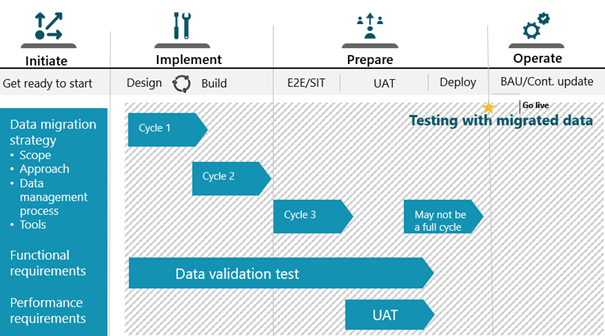
Data migration is a topic that will be addressed throughout the project phases. The strategy will likely fluctuate as you move forward on the specifics of the different data processed for the project.
 D365FOAdviceTips
Leave a comment