
- What are Virtual Entities?
- What is Dual Write?
- Main differences: Dual Write and Virtual Entities
- The best of both worlds: a hybrid approach
- Conclusion
When integrating D365 Finance with Dataverse, two key options stand out: Dual Write and Virtual Entities. Both connect D365 Finance to other Dynamics 365 applications, but they work differently and meet different business needs. There is no one perfect solution that fits all scenarios, so both options exist. Each has its strengths and disadvantages, so the right choice depends on factors such as data requirements, performance, and business processes.
What are Virtual Entities?
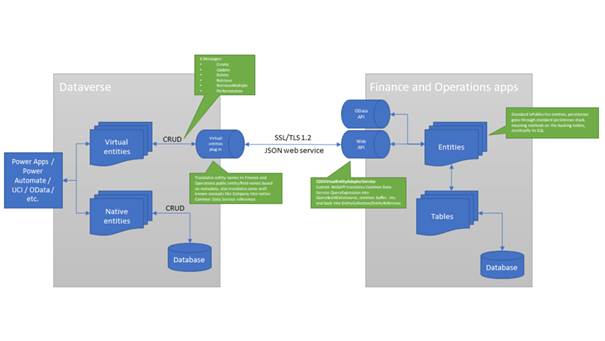
Virtual Entities allow you to access D365 Finance data in Dataverse without storing it inside. Instead of synchronizing and duplicating records, Virtual Entities retrieve data directly from D365 Finance in real time whenever needed.
Main benefits
- No data duplication: Data is only stored in D365 Finance, which reduces storage costs.
- Real-time access: Always shows the most recent data with no synchronization delay.
- Lightweight and powerful: no background synchronization process running.
- Easier maintenance: no complex integration mapping or replication issues
When to use Virtual Entities
- You need real-time access to D365 Finance data without duplication.
- You want to avoid the additional storage costs associated with Dual Write
- Your primary use case is reporting and analysis, not master data synchronization.
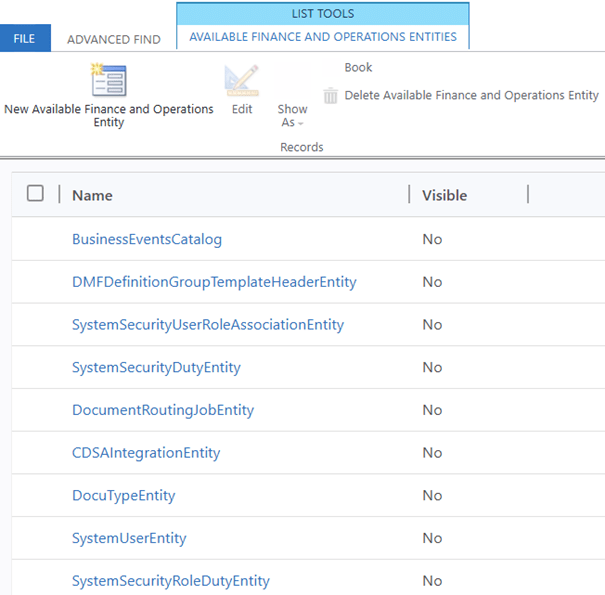
Point of vigilance to consider
Virtual Entities allow complete CRUD operations (create, read, update, delete) on D365 Finance data directly in Dataverse, just like native Dataverse tables. However, proper configuration of data entities and relationships in D365 Finance is essential for a smooth experience.
What is Dual Write?
Dual write is a framework that allows for near real time bi-directional synchronization between Dataverse and D365 Finance. This means that when data is updated in one system, changes are reflected on to the other almost instantly.

Main advantages
- Seamless synchronization for users: Ensures data consistency across all platforms.
- Predefined templates: Microsoft provides ready-to-use integration scenarios.
- Bidirectional data flow: changes made in either system is automatically synchronized.
- Data integrity: Business validation rules apply in both environments to maintain data integrity.
When to use Dual Write?
- You need data synchronized between D365 Finance and other Dynamics 365 applications.
- You want to use pre-configured templates for easier and faster setup.
- You need real-time updates between systems to support business processes.

Point of vigilance to consider
Although Dual Write is a powerful integration tool, it requires additional storage and can have an impact on performance, especially for high volume data integration scenarios (package of 1000 records and 2 min timeout: https://learn.microsoft.com/en-us/dynamics365/fin-ops-core/dev-itpro/data-entities/dual-write/sync-limits#dual-write-live-synchronization-limits).
Main differences: Dual Write and Virtual Entities
| Features | Dual Write | Virtual Entities |
| Data Flow | Bi-Directional | Bi-Directional (CRUD Operations) |
| Storage | Data exists in both D365 Finance and Dataverse | Data only in D365 Finance |
| Ideal scenarios | Synchronization of master data, transactional consistency, integration with standard Dataverse tables | Real-time access to D365 Finance data, avoiding duplication and enabling seamless use of Power Platform by users |
| Complexity of the setup | Requires configuration and mapping | Minimum setup required |
| Impact of Performance | Can introduce latency due to real-time synchronization | Efficient performance but depends on the responsiveness of the D365 Finance system |
The best of both worlds: a hybrid approach
In some cases, a hybrid approach may be the best choice:
- Use Dual Write for data masters (Customers, Vendors, Items) to ensure synchronization between applications.
- Use Virtual Entities for transactional data (invoices, orders, inventory) where real-time access is required but duplication is unnecessary.
Conclusion
Virtual Entities and Dual Write each have their advantages, and the right choice depends on your business needs. Dual Write is ideal for organizations that need real-time synchronization, while Virtual Entities work best for on-demand access without data replication.
 D365FOAdviceTips
Leave a comment